

Patient Trak review
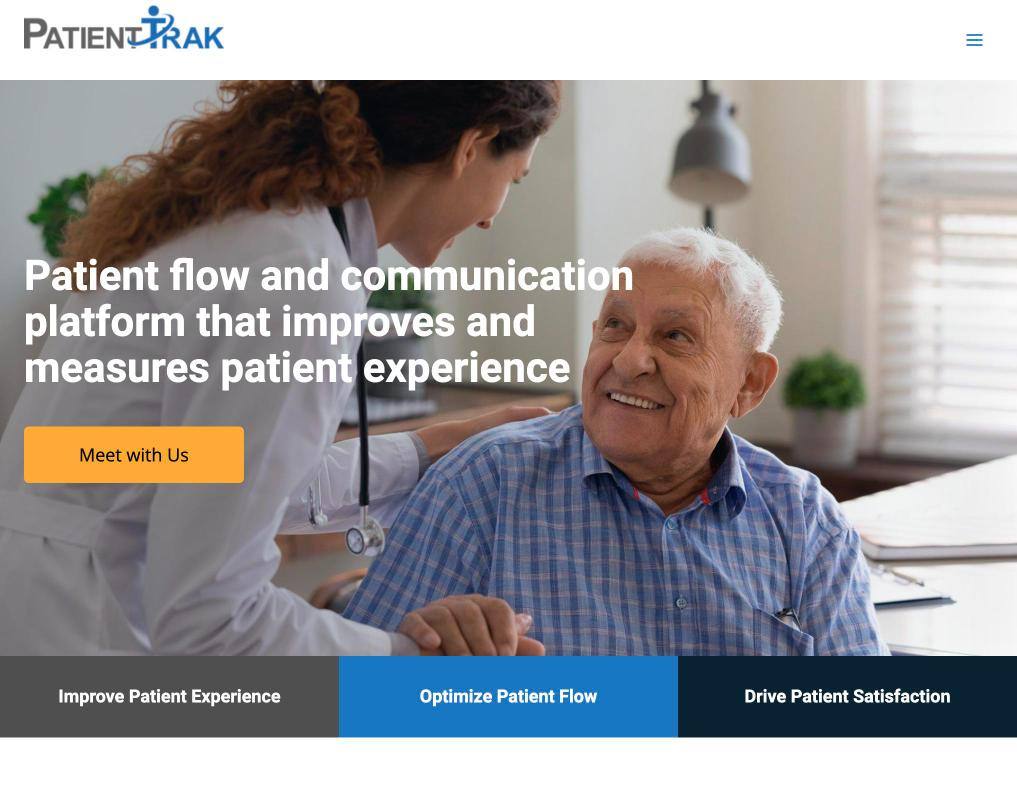
PatientTrak review (2026): PatientTrak is healthcare software from Lumin Medical LLC of Franklin, Wisconsin that combines patient flow tools (check-in, tracking, intake and texting) with a reputation module for patient surveys, review requests, listings and review monitoring. It suits clinics, surgery centers and health systems that want patient feedback tied to the actual visit. It is software, not a reputation management agency, so it will not remove reviews, suppress search results or run a reputation campaign for you.
Last reviewed November 23, 2026. Reviewed by Peter Anderson. This is a research-based review built from PatientTrak’s website, press releases and third-party software directories. OnlineReputation.services was not a paying customer of PatientTrak, and PatientTrak did not pay for or review this page. No firsthand testing or star rating is implied.
Is PatientTrak legit? The short answer
Yes. PatientTrak is a real, long-running healthcare software product. Its owner, Lumin Medical LLC, was founded in 2014 in Franklin, Wisconsin and bought the PatientTrak assets from a Batavia, Illinois company, moving the business to Franklin. In May 2016 Lumin acquired an online reputation management product from Implementing Technologies LLC of Charleston, South Carolina and folded it into PatientTrak. In 2017 PatientTrak was named one of 14 approved solutions in GE Healthcare’s Centricity Partner Program. The website lists the phone number 888.766.2862 and a copyright line for PatientTrak and Lumin Medical LLC.
On ratings, PatientTrak held 4.6 out of 5 from 14 verified reviews on Capterra when we checked in November 2026, with 4.3 for ease of use and 4.4 for customer service; the same 14 reviews appear on GetApp and Software Advice. That is a small sample and some of the reviews are several years old, so it tells you the product works for the people who use it rather than how it compares at scale. PatientTrak’s homepage shows logos for Ascension, Houston Methodist, Keck Medicine of USC, Legacy Health and Trinity Health, and quotes an Ascension leader crediting it with a 63% cut in time to see the provider (company-reported).
One small inconsistency: the website says “over 20 years” in one place and “more than 15 years’ experience” in its FAQ. The product predates Lumin’s 2014 founding, so both may be loosely true, but it is worth knowing if you are checking claims.
PatientTrak at a glance
| Item | Details |
|---|---|
| Founded | Lumin Medical LLC founded 2014; the PatientTrak product is older (site cites 15-20+ years) |
| HQ | 7441 S. 27th St., Suite 201, Franklin, WI 53132 |
| Phone | 888.766.2862 (website); 414-761-9800 (business listings) |
| Core services | Patient flow and check-in, digital intake, two-way texting, patient surveys, review requests, listings management, review monitoring, NPS |
| Pricing model | Software subscription; directories list a starting price of $395 per month; free trial available |
| Guarantee | None published |
| Best for | Practices, surgery centers and health systems that want feedback and reviews tied to patient visits |
| Third-party ratings | Capterra 4.6 (14 reviews), checked Nov 2026 |
What PatientTrak does: services
PatientTrak has two halves: operational tools that move patients through a visit, and a reputation module that measures and publishes what patients think afterward. Buyers coming from a reputation search should focus on the second half, but the first half is what makes the feedback timely.
Patient surveys and sentiment analysis
PatientTrak sends automated surveys after a visit and uses AI sentiment analysis to sort responses. It also tracks Net Promoter Score. For a practice, this is the early-warning system: an unhappy patient shows up in a survey before they show up on Google. Ask how surveys are triggered (by visit status in the EHR, by text, or by email) and whether results can be broken down by location, provider and visit type.
Review requests
The platform sends review invitations so satisfied patients can post on Google and other sites. This is the main lever most practices have for improving a star rating, because the volume of recent positive reviews usually matters more than any single bad one. Ask exactly who gets an invitation. Google’s policies and FTC rules restrict review gating, which means only asking patients who said they were happy, so the safest setup sends invitations to everyone or uses neutral criteria.
Listings management
PatientTrak manages business and provider listings so names, addresses, phone numbers and hours stay consistent. Accurate listings help local search rankings and stop patients from calling the wrong office. Multi-location groups with many providers get the most value here.
Review site monitoring and provider transparency
The reputation module monitors review sites and supports provider transparency, the practice of publishing verified patient ratings on a provider’s own profile page. Publishing your own star ratings can add trustworthy, recent feedback to pages you control, which helps both patients and search engines. Ask which review sites are monitored and how alerts work.
Patient flow, intake and texting
Outside reputation, PatientTrak offers patient tracking, kiosk and QR-code check-in, mobile digital intake and forms, online scheduling, a virtual waiting room and single sign-on. Its texting tools cover reminders, conversational texts, pre-visit and in-care updates, post-visit automation and broadcasts. Shorter waits and better communication are often the most direct way to earn better reviews in the first place.
Integrations
PatientTrak says it connects to EHRs through HL7, APIs and other methods. Software directories list integrations including MEDITECH Expanse, HST Pathways and AdvancedMD, and the company was a GE Centricity partner. Confirm your own EHR and practice management system before signing, since integration quality decides whether surveys and review requests fire automatically.
What it does not do
PatientTrak does not remove reviews, contest fake reviews on your behalf, suppress negative search results, remove news articles or handle personal reputation problems. If a damaging article, a defamatory review or a physician’s personal search results are the issue, you need a reputation management firm instead of, or alongside, this software.
How PatientTrak works: step by step
- Book a demo. PatientTrak asks prospects to contact sales or book a meeting; a free trial is listed in software directories.
- Scope the modules. Decide whether you need visit flow, texting, reputation, or all three. Price depends on modules, locations and providers.
- Integration setup. PatientTrak connects to your EHR or practice management system so visit events trigger texts, surveys and review requests.
- Configure surveys and review requests. Set survey questions, timing, which review sites to send patients to and who receives alerts.
- Listings and provider pages. Load locations and providers, clean up listings and turn on transparency pages if you want them.
- Go live and train staff. Front-desk and clinical staff use the tracking and check-in tools; managers use the dashboards.
- Monitor and report. Review sentiment, NPS, wait times and review volume by location and provider. PatientTrak claims wait-time improvements can appear within weeks (company-reported).
- Ongoing. The subscription continues monthly or on contract; review results depend on keeping invitations flowing.
Getting the most out of PatientTrak’s reputation module
Review software only works if invitations go out consistently. Practices that see the biggest rating gains usually send a request after every completed visit, keep the message short, and link straight to the review site that matters most locally, which is usually Google. Rotating a second site such as Healthgrades or Vitals can help balance a profile, but splitting patients across too many sites dilutes the effect.
Timing matters too. A request sent within a few hours of the visit gets far more responses than one sent days later, which is where PatientTrak’s EHR-triggered texting has an advantage over tools that rely on manual uploads. Watch response rates by location: a site with low response rates often has a check-out process problem, not a patient satisfaction problem.
Finally, close the loop on negative survey feedback. A manager who calls an unhappy patient within a day often resolves the issue privately, and that patient is less likely to post a harsh public review. Make sure alerts for low scores go to a named person at each location, not a shared inbox nobody checks. If a public review is already damaging and appears to violate the platform’s policies, report it through the platform’s own process, and keep documentation in case you need a removal specialist later.
How much does PatientTrak cost?
PatientTrak does not publish prices on its own site. Capterra, GetApp and Software Advice list a starting price of $395 per month, with a free trial and no free version. The starting price most likely covers a single module or a small practice; costs rise with locations, providers, modules and texting volume.
That puts PatientTrak in a similar range to other healthcare review and patient engagement software, and far below a managed reputation agency. It also means you are paying for tools your staff will run, not for a team that does the work.
Get in writing: what the starting price includes, per-location and per-provider fees, texting limits and overage charges, setup and integration fees, contract length and auto-renewal terms, and what happens to your survey and review data if you cancel.
Example cost scenarios
These are estimates based on the published $395 starting price, not quotes from PatientTrak.
- Single-location practice adding review requests and surveys. Likely near the starting price, around $395 to $600 per month, depending on providers and texting volume.
- Five-location specialty group using reputation plus texting. Estimate: low four figures per month once locations, providers and texting are added. Ask for multi-location pricing.
- Health system using visit flow, texting and reputation. Custom enterprise pricing with integration work; expect a multi-year contract and implementation fees.
For comparison, a single fake or defamatory review that breaks platform rules is a removal job, not a software job. A removal specialist typically quotes per review or per URL, and you may need both: software to grow good reviews and a specialist to deal with the bad one.
PatientTrak pros and cons
Pros
- Built specifically for healthcare, with patient flow and reputation in one platform.
- Surveys and review requests can trigger from real visit data through EHR integrations.
- Provider-level reporting and transparency pages suit multi-provider groups.
- Positive verified user ratings (4.6 on Capterra) and a free trial.
Cons
- Software only: no review removal, suppression or managed campaigns.
- Small public review base (14 reviews), several of them older.
- Pricing beyond the $395 starting point is not published.
- Reputation tools are one part of a broader product, so a review-only buyer may pay for features they do not use.
PatientTrak reviews: what customers and rating sites say
Across Capterra, GetApp and Software Advice, the same 14 verified reviews averaged 4.6 out of 5 in November 2026. Most reviewers rated it five stars, and Capterra showed 4.3 for ease of use, 4.4 for customer service and 4.4 for value for money. Reviewers come from medical practices and at least one veterinary practice, and comments generally describe the product as reliable and the support team as responsive.
The limitation is volume. Fourteen reviews over roughly nine years is a thin public record compared with large competitors that have thousands of reviews, so ask PatientTrak for two references that match your size and specialty, and if possible one that uses the reputation module specifically.
We did not find a meaningful volume of complaints. PatientTrak’s own site highlights enterprise health system logos and a quoted 63% reduction in time to see the provider at Ascension; treat these as company-reported results.
Who PatientTrak is best for (and who should look elsewhere)
Best for: outpatient clinics, surgery centers, dental and specialty groups, and health systems that want to improve patient experience and online ratings together, especially if they also need check-in, tracking or texting. Groups with many providers benefit from provider-level feedback and transparency pages.
Look elsewhere if: you need someone to remove a fake or defamatory review, push down a negative news story, repair a physician’s personal search results, or run a full reputation campaign. You also may prefer a review-only platform if you already have patient flow and texting tools you like.
PatientTrak vs. competitors
PatientTrak vs rater8
rater8 is a healthcare-focused patient feedback and review platform. Both target medical practices with surveys and review generation. PatientTrak’s difference is the patient flow layer: if you also want check-in, tracking and texting in the same system, PatientTrak covers more; if you only want reviews and provider ratings, compare rater8’s reporting and pricing side by side.
PatientTrak vs Birdeye
Birdeye is a large, multi-industry reputation and customer experience platform with thousands of user reviews on G2. It offers broader marketing and messaging features and a bigger ecosystem. PatientTrak is smaller and healthcare-only, which can mean tighter clinical workflows but less breadth. Health systems wanting one tool across many departments should demo both.
PatientTrak vs Podium
Podium focuses on texting, payments and review invitations for local businesses, including some healthcare practices. PatientTrak goes deeper on in-visit patient flow and healthcare integrations. A small practice whose priority is texting and payments may lean Podium; a practice whose priority is wait times and visit-linked surveys may lean PatientTrak.
Red flags to watch for (and how to vet PatientTrak)
- Review gating. Make sure review invitations are not sent only to patients who scored you highly. Google and the FTC restrict that practice.
- HIPAA and data handling. Ask for a business associate agreement (BAA) and how patient phone numbers and survey responses are stored and secured.
- Integration depth. Confirm your exact EHR version is supported and whether the integration is real-time or batch.
- Contract terms. Check minimum term, auto-renewal and price increases on renewal.
- Texting compliance. Confirm patient opt-in and opt-out handling for text messages.
- Data export. Make sure you can export survey and review data if you leave.
PatientTrak alternatives
| Provider | Best for | How it differs |
|---|---|---|
| OptimizeUp | Practices and healthcare brands worried about Google results and AI answers | Managed reputation service covering ORM, AI reputation and AI visibility rather than software |
| rater8 | Medical practices focused on patient reviews | Healthcare review platform without the patient flow layer |
| Birdeye | Multi-location groups wanting an all-in-one platform | Multi-industry platform with broader marketing and messaging tools |
| Podium | Small practices prioritizing texting and payments | Local-business messaging and review platform |
| ReviewTrackers | Enterprises analyzing reviews across many sites | Review monitoring and analytics focus |
| Defamation Defenders | Removing fake or defamatory reviews and harmful content | Removal service with a money-back guarantee on agreed removals |
Disclosure: OptimizeUp and Defamation Defenders are affiliated with the publisher of OnlineReputation.services. For more options, see our best online review management companies and the full reputation management service rankings.
Questions to ask PatientTrak before you sign
- Which EHR and practice management systems do you integrate with today, and can we speak to a customer on ours?
- Who receives review invitations, and how do you keep our setup compliant with Google’s and the FTC’s rules on review gating?
- If removed content comes back or is reposted at a new URL, will you remove it again at no additional cost, and how long does that warranty last? (If the answer is that PatientTrak does not remove content, plan for a separate removal provider.)
- Which outcome triggers payment: a removal at the source, a search-engine de-index, or reduced visibility? (For software, confirm you pay a flat subscription regardless of rating changes.)
PatientTrak FAQs
Is PatientTrak legit?
Yes. PatientTrak is owned by Lumin Medical LLC, founded in 2014 in Franklin, Wisconsin, and has been used by practices and health systems for years. It held a 4.6 rating from 14 verified Capterra reviews in November 2026.
How much does PatientTrak cost?
Software directories list a starting price of $395 per month with a free trial. Final pricing depends on modules, locations, providers and texting volume, so request a written quote.
Does PatientTrak offer a guarantee or refund?
We found no published guarantee. As a software subscription, terms are set in your contract, so ask about trial length, cancellation and refunds before signing.
Can PatientTrak remove bad reviews?
No. PatientTrak helps you collect more reviews, monitor them and respond, but it does not remove reviews. For fake or policy-violating reviews you need to flag them with the platform or hire a removal specialist.
How long does it take to see results?
Implementation time depends on your EHR integration. PatientTrak says wait-time improvements can come within weeks; rating improvements depend on how many patients receive and respond to review requests.
Is there a long-term contract?
Terms vary. Ask about minimum term, auto-renewal and price increases, and whether month-to-month is available after the first term.
Who owns PatientTrak?
Lumin Medical LLC of Franklin, Wisconsin. Company press releases have named James Hermann as President and CEO; confirm current leadership during your demo.
Where is PatientTrak located?
Business listings place Lumin Medical at 7441 S. 27th St., Suite 201, Franklin, WI 53132. The product was originally developed by a company in Batavia, Illinois.
What is the difference between review management software and reputation management?
Software like PatientTrak helps you collect, monitor and respond to reviews yourself. A reputation management service does work for you, such as removing harmful content or suppressing negative search results.
Is PatientTrak HIPAA compliant?
PatientTrak handles patient contact and visit data, so ask for its HIPAA documentation and a signed business associate agreement before going live.
Does PatientTrak work for dental and veterinary practices?
Its marketing targets healthcare broadly, and public reviews include a veterinary practice. Confirm integration with your specific dental or veterinary software.
Is PatientTrak the same as Patient Trak?
Yes. The product is written both ways online; the official site is patienttrak.net. It is not related to other similarly named patient tracking tools.
Our verdict on PatientTrak
PatientTrak is a solid, healthcare-specific option for practices that want patient feedback and online reviews connected to the visit itself, and its patient flow tools are a real differentiator against review-only platforms. Its public review base is small, and it is software rather than a service, so it fixes the pipeline of future reviews rather than any existing reputation problem. Shortlist it if you want better ratings over time and smoother visits; pair it with a removal or reputation firm if you are dealing with harmful content today.
Sources: patienttrak.net, Lumin Medical press releases (2016-2017), BizTimes Milwaukee, Capterra, GetApp, Software Advice, Mergr and LeadIQ business listings, all checked November 23, 2026.
Comparing providers? Get a free shortlist.
Tell us what you’re dealing with. We’ll suggest 2–3 providers that fit the problem and your budget, with no obligation.





Write a review of Patient Trak